Home / Pioneer Promise
Shipbuilding

Pioneer Promise

First colony ship built by humans. Built to travel to Gliese 667Cc

100Colonists
5Sentinels
8Cargo Storage Positions
Dececember 2146Arrival Date
Overview

The First Ship, A Genesis

Pioneer Promise — Humanity’s first interstellar colony ship. One hundred colonists. Five Sentinels. Twenty-three light-years to a new beginning.

Onboard Pioneer Promise the trip will take a little over 31 years, although over 40 years will pass on Earth. The distance to Gliese 667Cc is 23.6 light years from Earth.

Crew Lounge

Ship Tour

The Crew Lounge

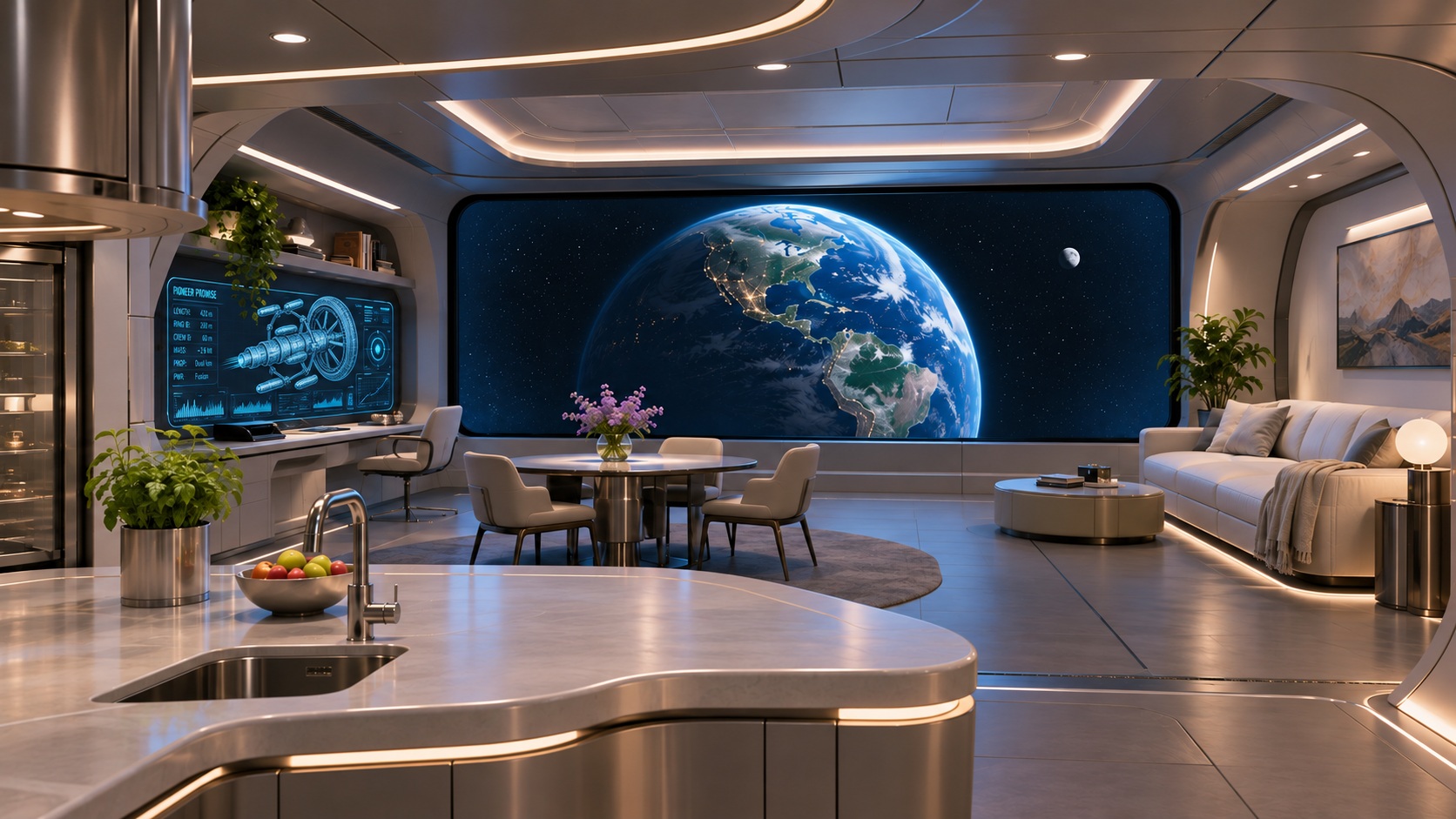
The lounge is where the active Sentinel will likely spend a large portion of their day. They have a large display with most every form of entertainment over the last 150 years is available.

This includes all the latest sporting events that have been loaded in addition to the hundreds of thousands of movies or millions of television shows recorded since 1940's.

Crew Lounge
Eating

Crew Galley

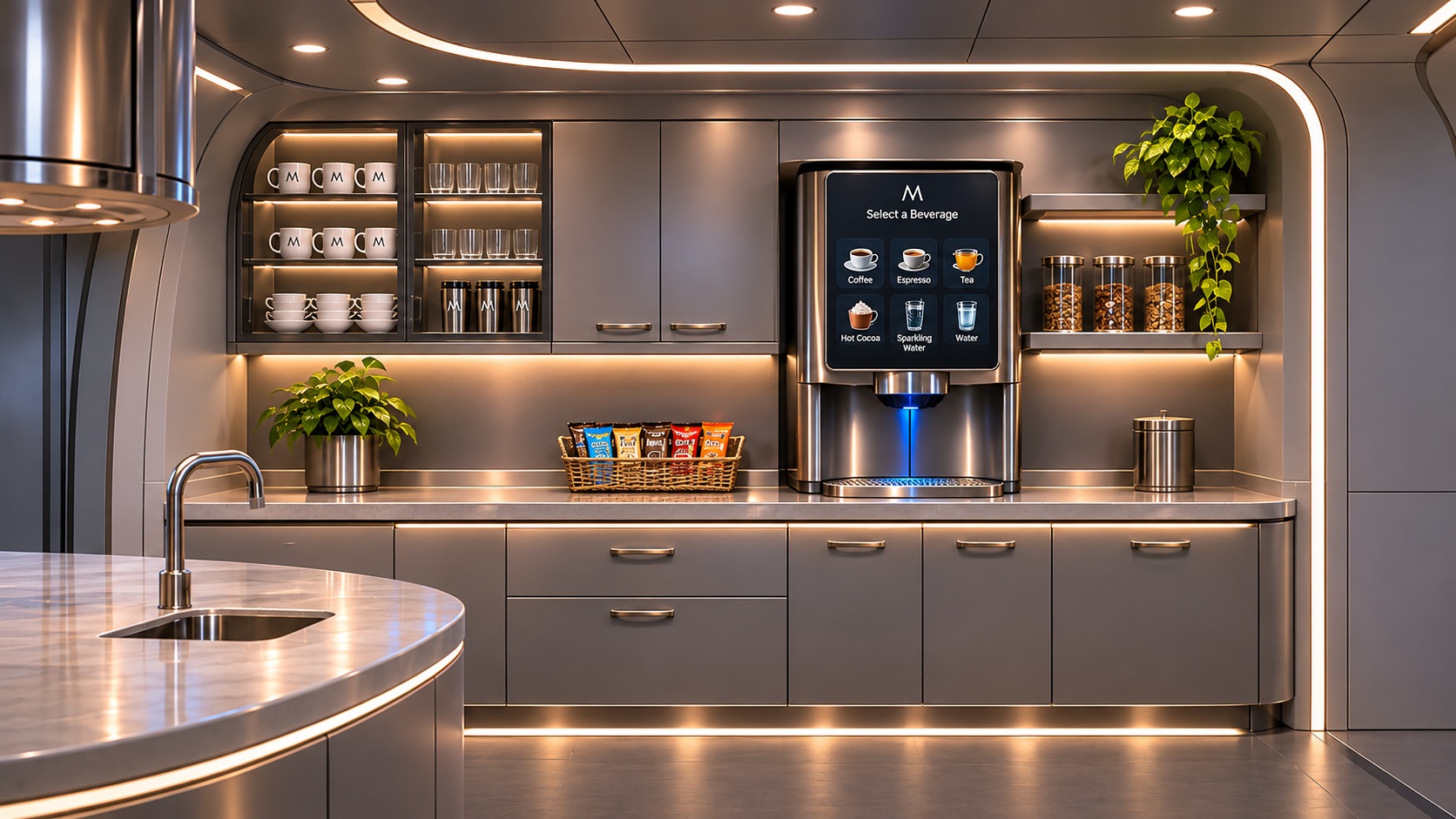
The crew galley aboard Pioneer Promise was designed to offer a welcome break from the routines of life aboard an interstellar spacecraft. Its fully automated beverage station provided everything from freshly brewed coffee and espresso to teas, juices, soft drinks, and flavored waters. A selection of nuTreat bars offered a quick, nutritionally balanced snack for crew members who preferred something convenient between duties.

For more substantial meals, the galley's automated food preparation systems offered an extensive menu of breakfast, lunch, and dinner selections, including familiar favorites and dishes from around the world. With comfortable seating, a well-equipped kitchenette, and a relaxed atmosphere, the galley was more than a place to eat. It was somewhere the crew could unwind, have a meal, and enjoy a little normalcy during their long journey between the stars.

Crew Lounge
Sleeping

Crew Quarters

The crew quarters aboard Pioneer Promise provided a comfortable, private retreat for the Sentinels during their extended watches. The room featured two separate sleeping berths, a small wardrobe stocked with Middleton Space jumpsuits, a compact workspace, and a private bathroom with a shower. Warm lighting and simple furnishings offered a welcome contrast to the ship's more utilitarian areas.

Although only one Sentinel was normally awake at a time, the second berth accommodated periods when watches overlapped, allowing an outgoing Sentinel to brief their replacement or assist with unexpected situations. Designed for both comfort and practicality, the quarters provided a place to rest and maintain a sense of normalcy during the long years between stars.

Crew Quarters
TPods and Sentinels

Sentinel Chamber

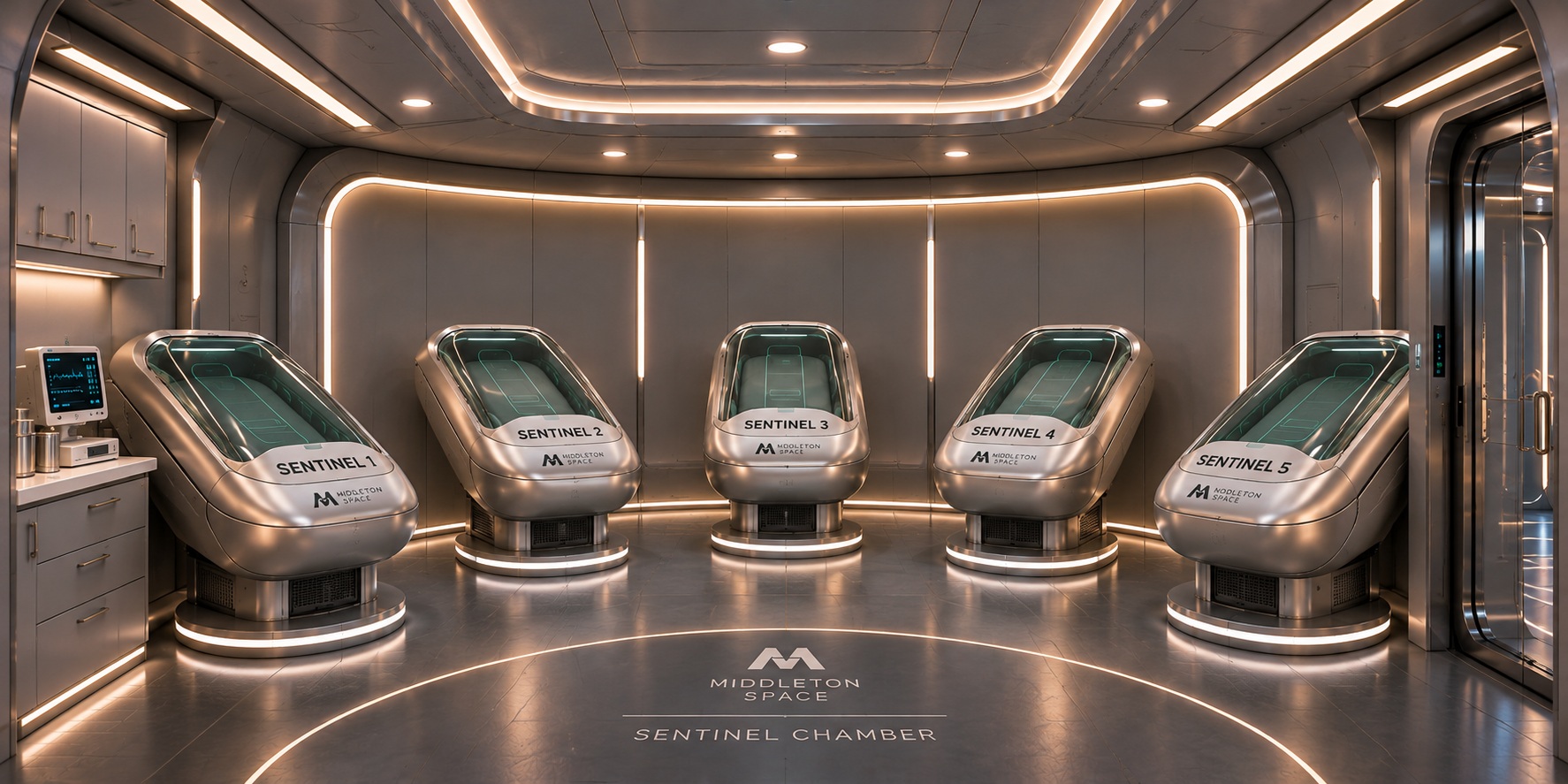
The Sentinel Chamber aboard Pioneer Promise was a dedicated suspension area containing five TPods, one assigned to each of the ship's Sentinels. Unlike the larger colonist suspension bays, the chamber was spacious and designed to allow easy access to each pod for medical examinations, equipment checks, and the waking process.

Each TPod was equipped with independent life-support systems, continuous medical monitoring, and automated controls to maintain its occupant in Trirenogen-induced suspended animation. Soft green status lights provided immediate confirmation that all systems were functioning normally.

During the ship's initial acceleration phase, all five Sentinels remained in suspension, including Sentinel One, who would assume responsibility for the first watch once the vessel reached its designated cruising velocity. Thereafter, the Sentinels would awaken in sequence, each serving an extended watch and transferring responsibility to the next.

Sentinel Chamber
Colonists

The Colonist Chambers

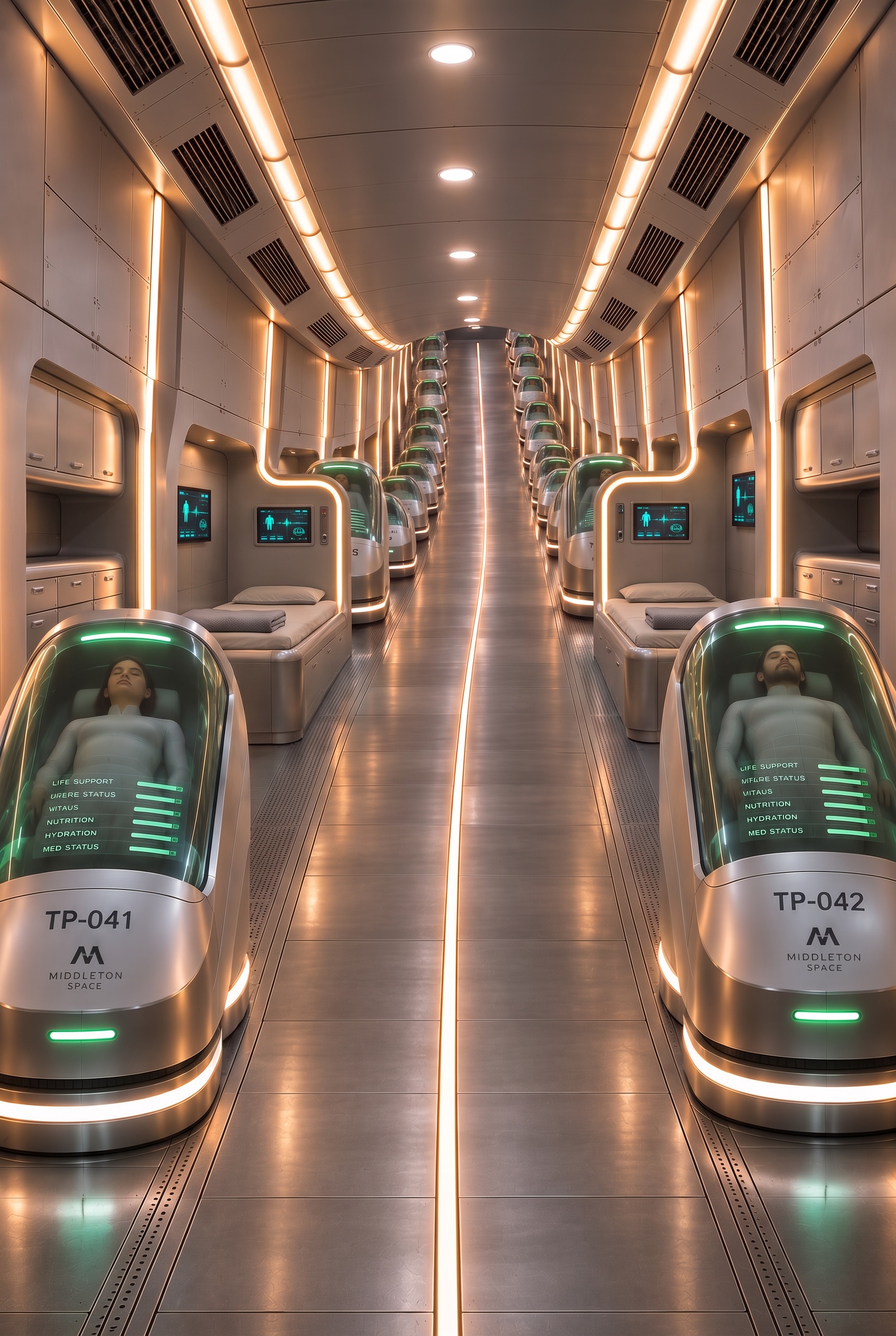
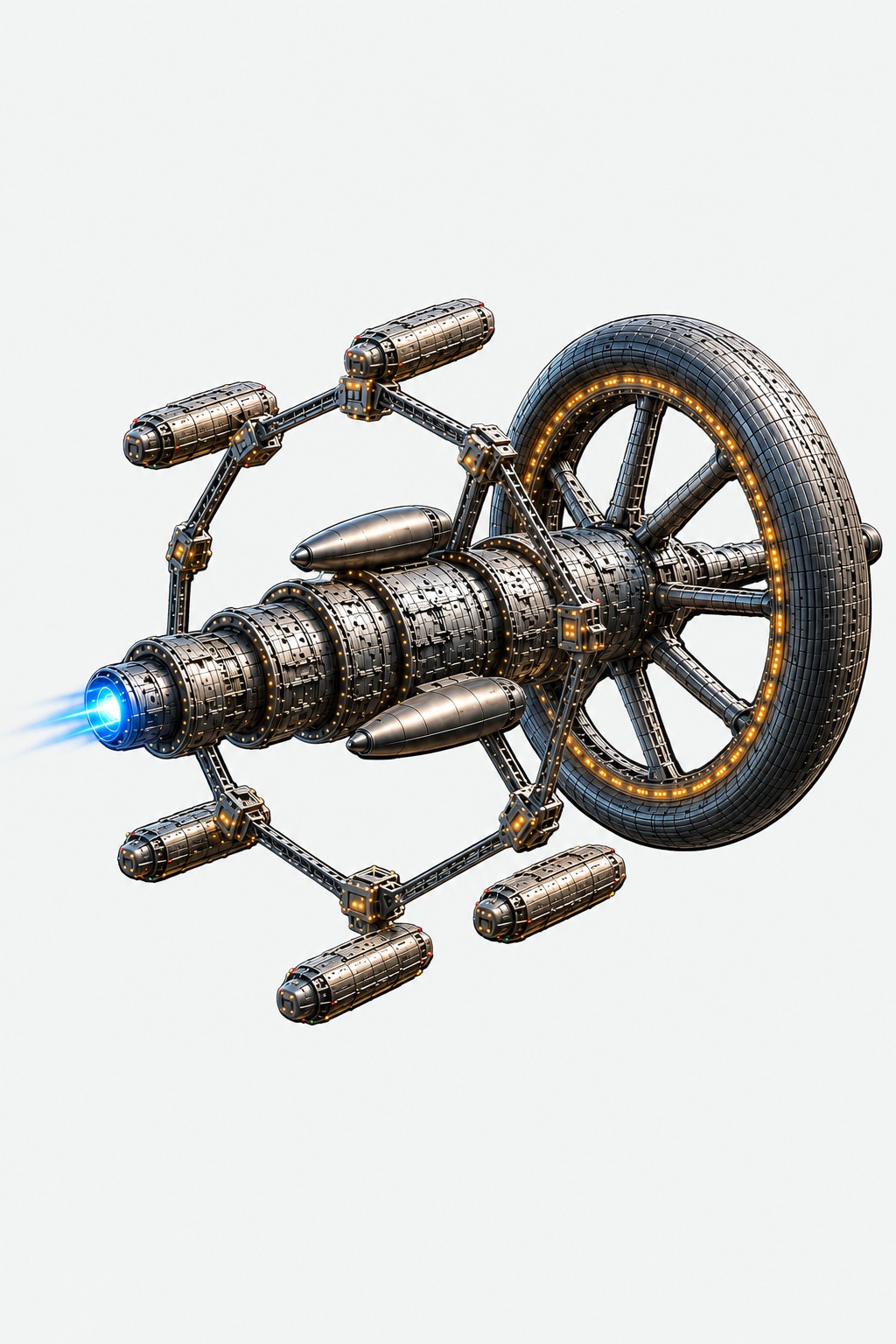
The colonist ring aboard Pioneer Promise was designed to accommodate the one hundred passengers making the twenty-three-light-year journey to Gliese 667Cc. Unlike the ship's central core, which remained in zero gravity, the massive rotating ring generated artificial gravity, allowing colonists to move normally whenever they were awake.

The ring housed the colonists' TPods in dedicated suspension bays arranged along its circular structure. Each bay featured rows of individual pods, with brushed-metal housings, transparent canopies, and softly illuminated green status indicators. Automated medical systems continuously monitored each passenger's vital signs, nutrition, hydration, and neurological activity throughout the decades-long voyage.

The gently curving corridors followed the circumference of the ring, connecting the suspension areas with medical facilities and other essential compartments. Although most colonists would remain in Trirenogen-induced suspended animation until the ship approached its destination, the facilities were designed to accommodate medical intervention, emergency awakenings, and the eventual revival of the passengers.

For the Sentinels, the colonist ring represented the heart of their responsibility: one hundred sleeping people, each trusting that the ship and its five guardians would deliver them safely to humanity's new home.
Colonists
Cargo

The Central Core

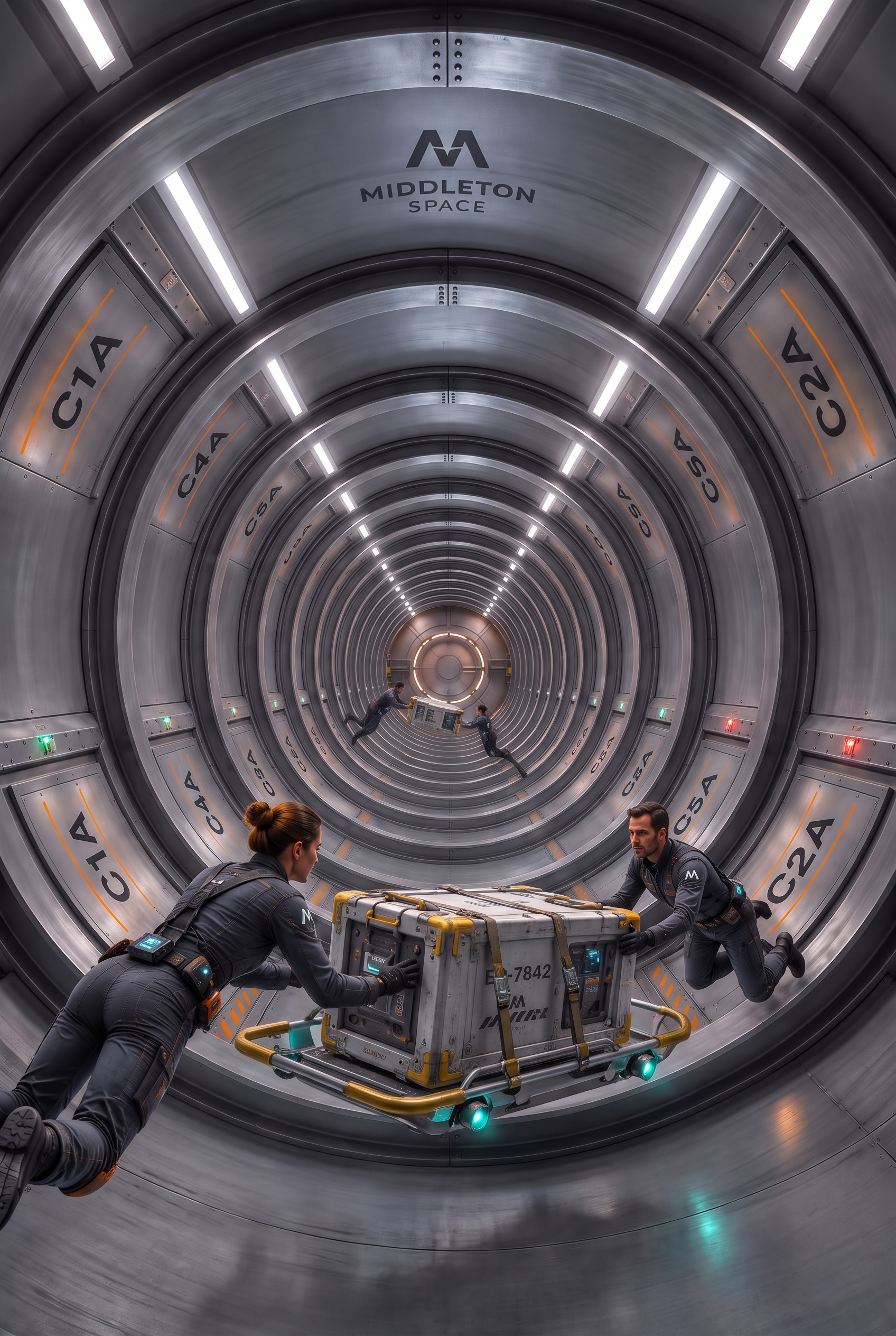
The central core of Pioneer Promise served as the ship's primary cargo storage and utility passageway. Unlike the rotating crew and colonist rings, the core remains in zero gravity, allowing equipment and supplies to be moved without the constraints of weight.

Approximately seven meters in diameter, the cylindrical core extended along the ship's central axis. Handholds positioned every few meters to help crew members maneuver through the weightless environment.

Large storage compartments were located around the cylinder's circumference, with heavy access doors. Behind them were the supplies needed to sustain the mission and establish humanity's first settlement on Gliese 667Cc: machinery, tools, medical equipment, agricultural supplies, replacement components, and essential provisions.

Cargo is moved through the core using specialized zero-gravity sleds equipped with compressed-air propulsion jets, allowing crew members to guide heavy equipment between storage areas without conventional lifting machinery.

At the far end of the core, a reinforced bulkhead separated the cargo compartments from the ship's engineering section and the Ulysses propulsion system.

Cargo

Make it so

Engine Room

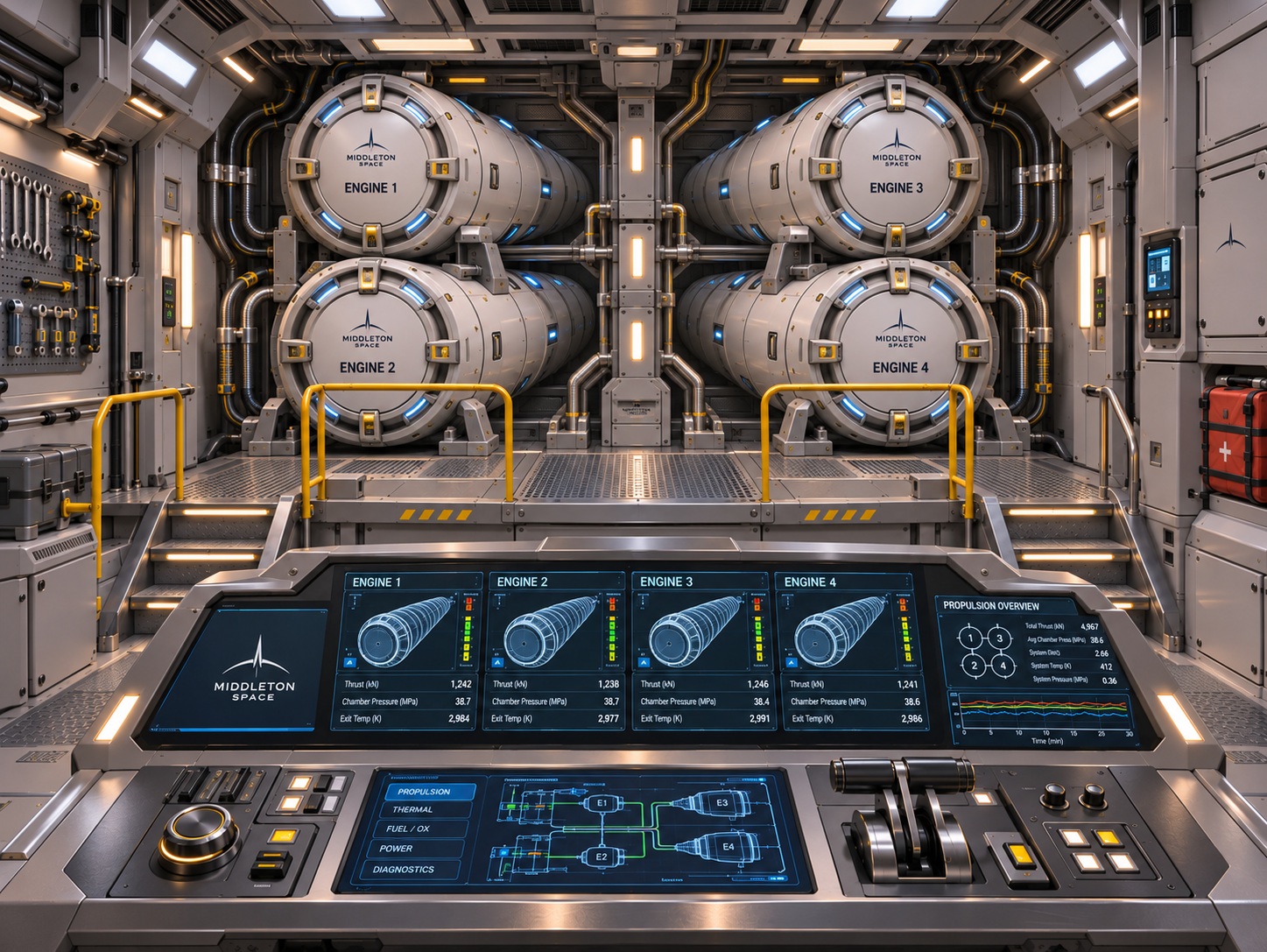
The Ulysses drive represented the culmination of decades of propulsion research at Middleton Space. Its four powerful fusion engines used helium-3 and deuterium as fuel, producing enormous amounts of energy through controlled nuclear fusion. Unlike conventional chemical rockets, the Ulysses system was designed to deliver sustained thrust over years of continuous operation, gradually accelerating Pioneer Promise to nearly sixty percent of the speed of light.

The helium-3–deuterium reaction produced primarily charged particles, allowing the engines to convert fusion energy into directed thrust while reducing neutron radiation compared with conventional deuterium-tritium fusion. Sophisticated magnetic confinement systems maintained the reactions, while powerful magnetic nozzles directed the high-energy plasma rearward..

The reality the drives are only used for the first 274 days (acceleration burn) and then the ship is flipped on its axis and does another 274 deceleration burn.

Additonally there are 14 self contained Trionex based navigational engines located around the ship.

Cargo